
Understanding your skin type is the first and very important step in selecting the right skincare routine. Most people use different products without being aware whether their skin is oily, dry, sensitive, or combination, which often leads to acne, irritation, dullness, or open pores. identify your skin type at home is not difficult if you know the right signs. now we will discuss this in detail
Table of Contents
How many skin types do we have?
Identify your skin type at home is very important. There are five main skin types:
- Sensitive skin
- Dry skin
- oily skin
- Normal skin
- Combination skin

How to check your skin type at home.
There are simple method to identify your skin type at home without going to see a dermatologist. Most of the people try different products without knowing their skin type, but it is easy to identify your skin type at home with simple methods.
1. Oily skin
Identify your oily skin type at home.
- large visible pores
- Frequent acne or breakouts
- Face looks shiny
2. Dry skin
You can identify your skin type at home.
- Flaky or rough texture
- Skin feels tight
- Dull appearance
3. Combination Skin
Very easy way to identify your skin type at home.
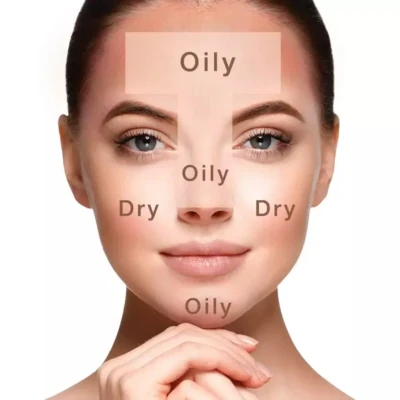
- Oily t-zone
- Dry cheeks
4. Sensitive Skin
- Easily reacts to new products
- Burning and itching
5. Normal Skin
- Very smooth or balanced
- Not too dry and oily
1.Identify Oily skin type at home.
Oily-skinned people often experience several noticeable symptoms. One of the most common symptoms is enlarged pores, especially around the forehead, nose, and cheeks. The face may become greasy or shiny within a few hours after washing due to extra oil production. Oily skin can face different problems, frequent acne and pimples. Another common issue is that makeup does not stay on the skin for a long time because of extra oil. For long-lasting makeup, it is important to identify your skin type at home.

helpful care and advise
• Use oil-free, non-comedogenic cleansers and moisturizers.
• Niacinamide is effective for oily skin, as it substantially helpsreduce oil production
• Avoid heavy creams and excessive scrubbing.
- Cleanse thoroughly: Use a gentle foaming cleanser to remove excess oil without stripping skin.
- Exfoliate regularly: 2–3 times per week with salicylic acid or glycolic acid to unclog pores.
- Hydrate (don’t skip moisturizer!): Choose an oil-free, non-comedogenic moisturizer. Even oily skin needs hydration.
- Blotting papers & mattifying products: Carry oil-absorbing sheets and use lightweight powders to manage shine.
- Clay masks: Weekly clay masks can help absorb excess oil.
2.Identify Sensitive skin type at home.
people with sensitive skin often experience redness and a feeling of burning or stinging, especially after using certain skincare products. The skin may also become start flaking and dry, which show, that the skin barrier is weak. In some cases, sensitive skin can develop rashes or small bumps as a reaction to irritants. one more common symptom is itching, which can make the skin feel uncomfortable and swollen, You can identify your skin type at home to check whether your skin is sensitive.. Because of these reactions, sensitive skin requires gentle care and products that are specifically formulated to soothe and protect the skin.

Helpful Care Advice
Always use fragrance-free and alcohol-free products.
Always do a patch test before trying a new product.
Choose a mild, gentle cleanser (avoid harsh face washes).
Pat your face dry softly instead of rubbing it.
Moisturize your skin daily with very soft hands.
Use sunscreen (SPF, Sun Protection Factor) every day to prevent irritation and redness.
Avoid over-exfoliating (once a week is enough).
Always wash your face with lukewarm water.
3.Identify your Dry skin at home.

Dry skin type is a common and sometimes temporary condition that happens when the skin lacks enough moisture to stay soft and healthy. People with dry skin feel uncomfortable dryness, especially after washing their face. One of the main symptoms is scaly skin with a rough texture, which looks dull and uneven sometimes; dry skin may cause a burning sensation or irritation. The skin can also become cracked, mostly in dry weather, which may lead to discomfort. Another common symptom is itchy skin, which can make the skin feel irritated all day long. Proper moisturizing and care are important to keep dry skin healthy and safe. you can best care your skin type at home.
Helpful Care Advice
- lukewarm water is your best friend and the hot water strips the natural oils right off your skin.
- Moisturize your skin 2-3 times daily, especially after washing your face.
- Gently wash your face at least twice.
- Drink enough water (daily 8-10 glass)
- Protect your skin with sunscreen
- Avoid hot water and harsh soap.
- Use vitamin E serum and Apply Vitamin E cream daily at night.
4.Identify Combination skin type at home.
You have both dry and oily skin, depending on the area. Oily skin experiences acne at a higher frequency. Dry skin type tends to experience flakes, redness, and tightness. People with combination skin may also feel that their skin changes with the seasons. For example, the skin may feel more oily during the summer, while in the winter it can become dry or flaky. If you can identify your skin type at home you can choose the right skin care routine.
Helpful Care Advice
- Use two different type of moisturizers ;use a lightweight, oil-free gel for your T-zone and a richer cream on your drier cheeks.
- Oil free sunscreen daily
- Use A Toner After Cleansing Your Face
- Exfoliate your skin and apply sheet masks
- Hyaluronic Acid: Weightless hydration for all zones.
- Niacinamide: Balances oil while brightening dry spots.
5.Identify Normal skin type at home.
Normal skin is well-balanced and “Goldilocks” of skin types. You have a healthy skin barriers and smooth texture. When you touch normal skin ,it feels neither excessively oily nor dry .It has a consistent texture and feels smooth and lovely .Normal skin has no sign of redness ,irritation and no bumps. It is very important to identify your skin type at home before using any kind of skincare product.

Skin care
Normal skin still needs love and affection to keep it looking and feeling happy and healthy. Identify your skin type at home to see if you have normal skin.
- Maintain a healthy diet and drink plenty of water.
- Exfoliate your skin to remove dead skin cells.
- Use Vitamin C serum in the morning. It protects your skin from environmental stress.
- Take green tea daily.
Conclusion.
Understanding your skin type type at home is the first and most important step in building an effective skincare routine Whether your skin is dry, oily, normal, sencitive, or combination, every type requires proper care and diffrent suitable products. By following the right skincare routine and choosing products according to your skin type, you can maintain your skin balanced, healthy, and radiant skin. If you identify your skin type at home, it becomes much easier to take proper care of your skin and maintain its natural balance.
FAQs
How can identify my skin type at home?

Wash your face and wait for 30–40 minutes without applying anything.
If it feels balanced → normal skin.
If your skin feels tight → dry skin
If only the T-zone is oily → combination skin
If it becomes shiny → oily skin
if your skin feel redness and itchiness →sensitive skin
Why is it important to know your skin type?
your skin type helps you to choose the right skin care product and routine.
How often should i wash my face ?
According to dermatologists recommendation washing your face twice a day.
Which ingredients are safe for most skin types?
ingredients like. hyaluronic acid, aloevera, vitamin E and C, glycerin, are gentle for most skin types